
5 Things to Look for in an Anti-Icing System That Won’t Let You Down
The 2025–2026 winter put the structural weakness of dry-salt dependency on full display. The U.S. Geological Survey’s Mineral Commodity Summaries documented a regional shortage across the Northeast and Midwest driven by surging demand, port congestion, frozen Great Lakes shipping lanes, and delayed mine deliveries.
Demand for salt is driven by the total number of weather events, not total snowfall. Frequent smaller storms burn through supply faster than forecasts suggest, which both regions suffered from last year.
For operations that made the move to brine anti-icing, the efficiency gains were significant. According to the American Public Works Association, anti-icing with brine delivers the same level of road service using one-quarter to one-fifth the salt of traditional salting methods, and it does it proactively, before ice bonds to pavement rather than after.
Though more efficient and a huge solution to the salt shortage, it requires a fundamentally different strategy, and only works if deployed before a storm.
Which is why the components behind the nozzle aren’t an afterthought. A leaking fitting, a failed seal, or a pump that won’t prime at 2 AM doesn’t just cost maintenance time — it costs the window. And it costs the drivers and travelers depending on treated roads. Here are five things that separate a system that holds up all season from one that doesn’t.
1. Material Compatibility with Chloride Service
Chloride brine is a corrosive liquid, to many metal components, making material selection critical. Metal fittings that handle clean water for years can begin deteriorating within a season of regular brine contact. Salt creep, the migration of chloride solution through connections and into threads, leaves corrosive deposits that widen gaps and accelerate failure. What starts as a microscopic pathway becomes a weeping fitting, then a failed connection.
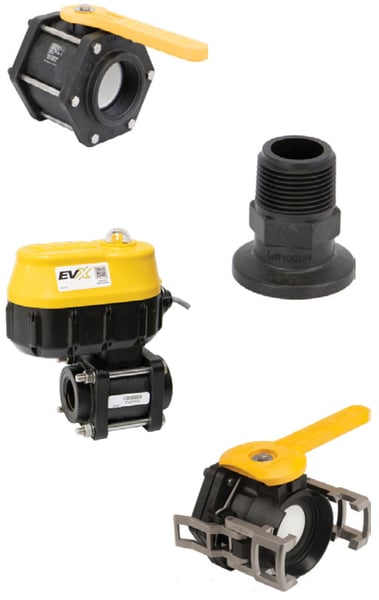
The standard for brine service is polypropylene. It resists chloride attack that degrades metal over time, and tight tolerancing at connection points closes the gaps where creep begins. Banjo’s polypropylene fittings and valves are built to this standard and have been specified by anti-icing OEMs for decades. Fewer leak points. Fewer mid-season surprises.
2. Seal Spec for Temperature and Media
Valves, fittings, and pumps get most of the attention in an anti-icing system, but seal materials play an equally important role in long-term reliability. Every system relies on O-rings, gaskets, and seats to keep brine contained and equipment operating as intended. When those components aren't matched to the fluid and operating environment, leaks, maintenance issues, and premature failures often follow.
Anti-icing systems face a unique combination of challenges. Chloride brines can be aggressive on materials, temperatures regularly swing below freezing, and equipment may sit idle for extended periods before being called into service during a weather event. Seal materials need to maintain their flexibility and sealing performance through all of it.
For chloride brine applications, EPDM is a common choice because it offers excellent compatibility with many brine solutions and maintains flexibility in cold-weather conditions. That flexibility helps seals continue doing their job as temperatures drop and operating conditions become more demanding.
For glycol-based applications, such as those used in airport deicing operations, material requirements may differ. Fluid compatibility, operating temperature, and system design should all be considered when selecting seal and seat materials. A small leak may not seem significant at first, but product loss, cleanup costs, environmental concerns, and additional maintenance can add up quickly over the course of a season.
The takeaway is simple: don't treat seal materials as an afterthought. Selecting materials that are compatible with both the fluid and the operating environment can help reduce maintenance, prevent leaks, and keep anti-icing equipment ready when the next storm arrives.
3. Connection Count and Leak Point Reduction
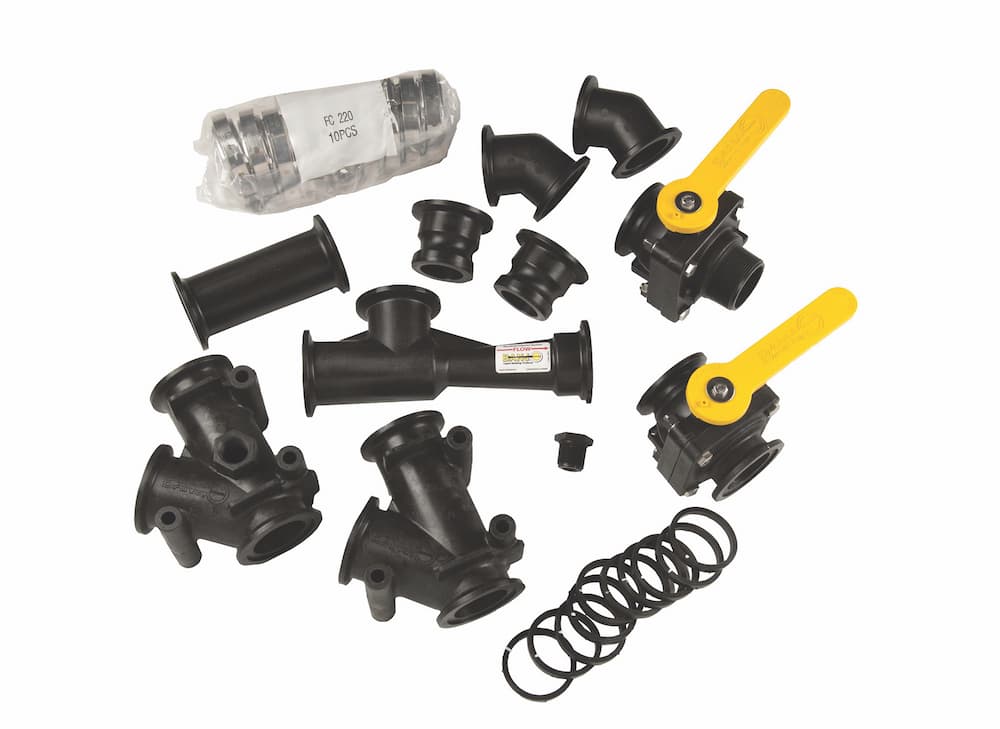
Every connection in a liquid handling system represents a potential maintenance point. Whether it's a threaded fitting, coupling, valve connection, or adapter, each additional connection introduces another place that must be installed correctly, inspected regularly, and maintained over time.
In anti-icing applications, those risks can become more pronounced. Chloride brines can leave deposits on equipment, temperature swings can affect seals and threaded joints, and vibration from transport and operation places additional stress on the plumbing system. The more connections a system contains, the more opportunities there are for leaks, seepage, or maintenance issues to develop throughout the season.
That's why many equipment manufacturers and operators look for ways to simplify system layouts wherever possible. Fewer connections can mean fewer potential leak points, less time spent inspecting plumbing before an event, and faster troubleshooting when maintenance is required.
Banjo’s manifold flange connections are designed with this in mind. By reducing the need for multiple threaded connections, manifold systems can simplify plumbing layouts while making inspection, service, and system modifications more efficient. Components can be isolated and replaced without disassembling large sections of the system, helping reduce maintenance time and get equipment back in service faster.
When evaluating an anti-icing system, don't just look at the pump, tank, or spray equipment. Take a close look at the plumbing architecture. A simpler system with fewer connections often translates to less maintenance, fewer opportunities for leaks, and greater reliability throughout the season.
4. Flow Control Responsiveness
Anti-icing isn’t a set-and-forget operation. Operators need to start and stop brine application precisely, at intersections, bridges, and transitions between surface types, as conditions change across a route. Valve actuation that hesitates or sticks doesn’t just waste brine; it compromises coverage and puts the operator in a position of guessing whether the surface was treated.
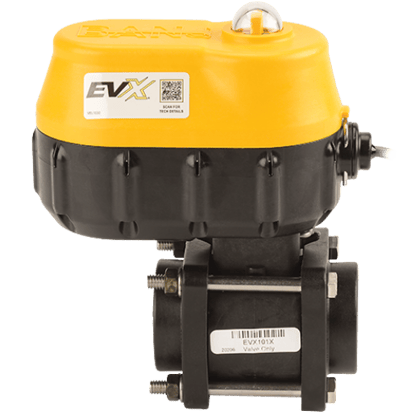
The standard here is instant, repeatable actuation. Banjo’s EVX electric valves deliver consistent, dependable flow control on demand. In a closing storm window, there’s no margin for hesitation in either direction.
5. Transfer Integrity at Loading
Loading and transfer points are common sources of fluid loss in anti-icing systems. Each time an operator connects or disconnects a hose, small amounts of brine or glycol can remain at the coupling. One disconnect may not seem significant, but repeated cycles across a full season can lead to wasted product, messy loading areas, and added cleanup requirements.
That residue can also create safety concerns. Brine and glycol left around transfer areas can contribute to slippery surfaces, equipment corrosion, and contamination risks, especially in high-traffic loading zones.
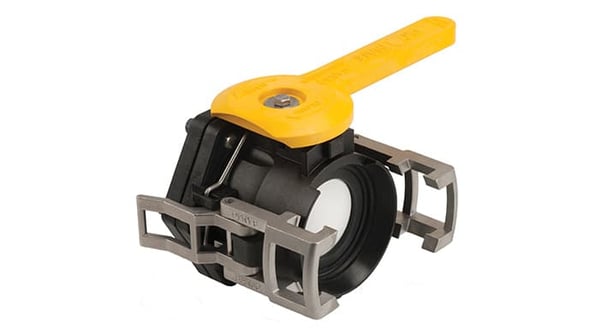
Banjo’s Dry-Mate Dry-Disconnects are built for this purpose. They help reduce spillage during transfer, keep loading areas cleaner, and limit the fluid loss that can add up across a high-cycle season. For glycol loading at airports, where deicing fluid can carry disposal, cleanup, and compliance considerations, reducing spillage is especially important.
What to look for:
Choose dry-disconnect couplings that are compatible with your fluid, sized for your flow requirements, and built to withstand repeated seasonal use.
Built for Anti-Icing. Proven in the Field.
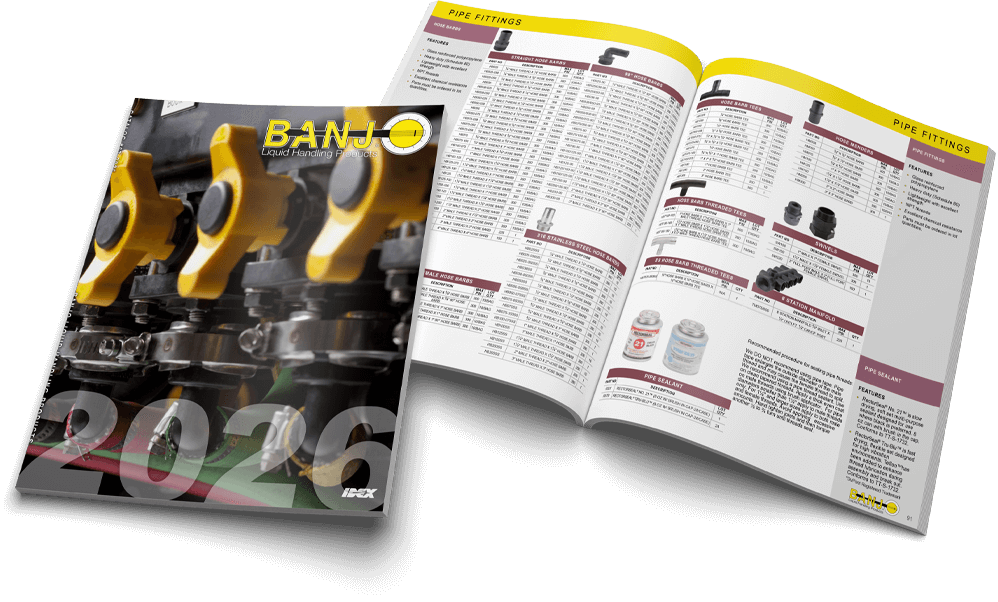
Explore the full range of Banjo valves, fittings, pumps, and fluid handling components specified for anti-icing and deicing applications.
Pre-Season Reliability Checklist
Run this before the first storm of the season. If any answer is no or unknown, address it before the window opens.
Seat material verified for the application (PTFE or RPTFE as specified).
Demand a Banjo
Brine-based anti-icing has become an essential part of winter maintenance programs because it helps operations use materials more efficiently, treat roads proactively, and reduce dependence on dry salt inventories. But the effectiveness of any anti-icing program depends on more than the liquid itself. It depends on having equipment that performs reliably when weather windows are short and failure isn't an option.
Material selection, seal compatibility, plumbing design, flow control, and spill prevention all play a role in system performance. Getting those details right before the season starts can help reduce maintenance, minimize downtime, and keep equipment ready when conditions change.
For more than 65 years, Banjo has helped customers move liquids reliably in demanding applications around the world. Whether you're building equipment, specifying components, or maintaining an anti-icing fleet, choose products designed to keep your operation running when it matters most.